Avalon
Le Morte d'ArthurAvalon is the Holy Isle to which Arthur is carried at the story’s close, a destination that gives the ending a spiritual horizon while leaving the king’s ultimate fate unstated. The book’s prefatory interpretation also connects the name Avelion with Glastonbury, but treats that identification as part of the story’s shifting geography rather than as a simple, settled location.
The Isle at the Story’s End
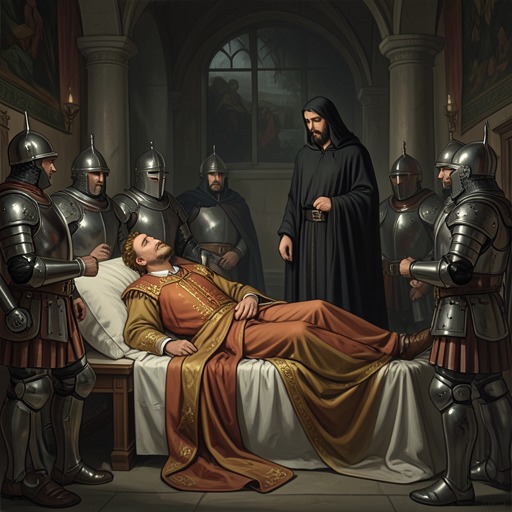
In the book’s account of the final movement, the destruction of the fellowship cannot be undone. The Grail quest has divided the knights according to spiritual tests, and its achievement does not restore the former unity: the boundary between good and evil remains. Arthur and Launcelot make efforts to prevent the tragedy that follows, but those efforts fail. Against this movement toward ruin, the concluding image is brief and restrained: Arthur is in a barge bearing him to the Holy Isle. Avalon is thus presented not as a place described through its buildings or landscape, but as the destination of a passage away from the political and chivalric world that has fallen apart.
The same account sets Arthur’s departure beside the other survivors’ altered lives. Guenever lives at Almesbury as a nun, in fasting, prayer, and almsgiving; Launcelot and his fellowship, formerly knights, have become hermit-priests and perform bodily service. Avalon belongs to this closing pattern of withdrawal and religious change. Arthur is borne to the island, while the former queen and the former knights remain in explicitly penitential or devotional lives elsewhere. The contrast gives the destination weight without specifying what awaits Arthur there.
Avelion, Glastonbury, and Unsettled Geography
The editor’s geographical discussion makes Avalon’s location less definite than its role at the ending. Malory appears, at one point, to connect Camelot with Avelion, or Glastonbury; elsewhere, he identifies Camelot as Winchester. The editor uses these differing associations to illustrate how places in the romance shift across Wales, Cumberland, and other settings, rather than maintaining a consistent map. Avelion’s association with Glastonbury therefore supplies a geographical echo for Avalon, but the passage does not establish that the Holy Isle and Glastonbury are simply interchangeable.
That uncertainty matters because the name operates in two registers. In the ending, Avalon is the destination of Arthur’s barge and is expressly called the Holy Isle. In the geographical discussion, Avelion appears as a possible place-name linked with Camelot and Glastonbury. The connection lends the romance’s sacred destination a presence within the landscape known to its readers, while the editor’s qualifications preserve the difference between a narrative association and a secure geographical identification.
Narrative and Interpretive Significance
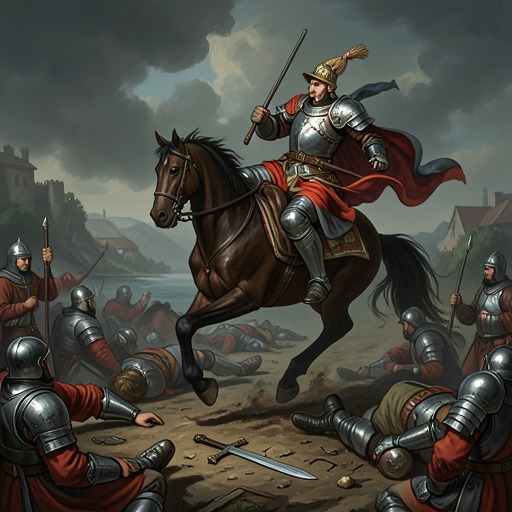
The account of Avalon gains its force through placement rather than description. The book first recalls Arthur’s long success: with the Round Table fellowship he brings order to a disordered realm and becomes emperor through his campaign to Rome. The later catastrophe, following the Grail’s exposure of the knights’ spiritual limits, overturns that apparent permanence. The barge to Avalon marks the final separation from the former world of feasts, tournaments, and royal fellowship; the island stands at the edge of what the account can affirm about Arthur’s end.
The ending’s restraint is significant. It does not narrate Arthur’s life on the island or declare that he will return. Instead, it places his journey beside the prayerful retreat of Guenever and the service of Launcelot’s former companions, leaving Avalon as a sacred destination within a larger pattern of loss and religious withdrawal. Its association with Glastonbury adds a further layer: the place belongs both to the romance’s final passage and to the editor’s account of the unstable geography through which Malory’s world is imagined.